
Babies and infants are fragile beings. Indeed, one of the defining characteristics of the human species is that we bring into the world little ones who cannot fend for themselves and who must therefore be supported by their loved ones during their first years to survive. These babies are thus often prone to illnesses, some of which can be quite alarming. Let’s look at the causes, symptoms, and treatments of atopic eczema in babies.
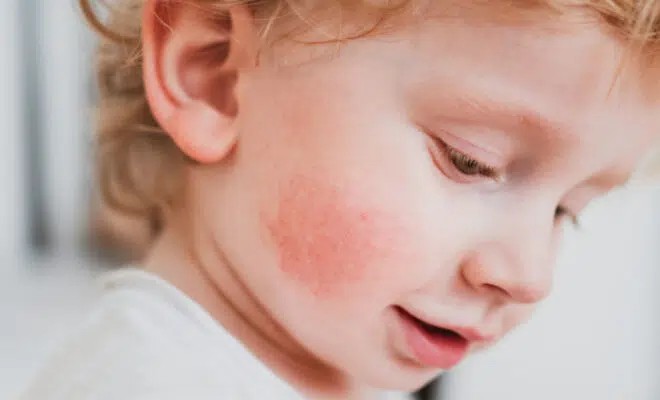
How does atopic eczema manifest itself in babies?
In general, atopic eczema is characterized by dryness, redness, and itching of the skin. This type of eczema can affect all kinds of people, both young and old. As with any condition that causes itching, the main risk lies in the irresistible urge to scratch, which only worsens the infection because it opens the door to all sorts of viruses and bacteria.
Atopic eczema in babies usually appears first on the forehead, cheeks, chin, or thighs, often very soon after birth. However, it can also affect older children; in these cases, the irritations will more likely occur in areas such as the creases of the elbows and knees, ankles, wrists, hands, or behind the ears. How then can this condition be effectively treated?
Effectively treat your baby’s atopic eczema
Atopic eczema in babies can be very distressing for parents. Not only does the dry, flaky, and red skin —sometimes even cracked—radically alter the baby’s appearance, but the resulting discomfort can also lead to intense and continuous crying. This can be very disheartening for parents, but fortunately, there are simple and effective solutions.
As always, you should consult a doctor as soon as the first symptoms appear. Only a doctor can give you the appropriate recommendations to protect your baby’s delicate skin. However, most doctors will recommend a daily bath in lukewarm water, followed by moisturizing the baby’s skin with an emollient cream, such as those offered by Bepanthen, a skin protection specialist.
Understanding the causes of atopic eczema
Furthermore, it’s also important to ensure your baby doesn’t scratch excessively to prevent infection from worsening the problem. Keeping your baby’s moisturizer in the refrigerator during the summer, for example, will help reduce the urge to scratch while keeping them cool. You can also have them wear gloves, especially in winter, to lessen their tendency to scratch, or, for older children, give them a free printable picture to keep them entertained.
On the other hand, it’s just as important to identify the causes of topical eczema in babies. This isn’t always easy, as their skin is so fragile and prone to irritation. Certain woolen clothing, the composition of the soaps you use, allergies, or simply excessive heat in the room can all be culprits.